Pearl Care
How to Care for Pearls
What Japanese Pearl Science Reveals About Sweat, Heat, and Luster
Pearls are often described as timeless. But a pearl is not a stone. It is an organic gem, grown layer by layer inside a living oyster, and it responds to the world around it: to your skin, to the air, to heat, and to the products you wear every day.
The good news: caring for pearls is simple once you understand why they need care. In this guide, we share what pearl researchers in Japan have actually observed when pearls are exposed to sweat and heat, and turn those findings into an easy daily routine.
At Miseki Jewelry, a Japanese-owned jewelry store founded in San Francisco in 1967 and located in the city’s Japantown, we believe the best pearl care starts with respect for what a pearl is.
Quick Answer: Wipe your pearls with a very soft, clean cloth after every wear, put them on after perfume, hairspray, and cosmetics, keep them away from heat and hot water, and store them away from strong sunlight. Sweat, acids, and heat are among the main causes of pearl deterioration.
Why Pearls Need Special Care
A pearl’s glow comes from nacre, the layered material that builds up around the pearl as it grows. Nacre is made mainly of calcium carbonate, held together with a small amount of protein. This structure is what gives pearls their soft, deep luster. It is also what makes them more delicate than diamonds or sapphires.
GIA (Gemological Institute of America) notes that pearls can be damaged by many chemicals and by all acids, including hair spray, perfume, cosmetics, and even perspiration. GIA also notes that heat from intense light can cause dehydration and cracked nacre.
In Japan, the Pearl Science Laboratory (Shinju Kagaku Kenkyujo), a Tokyo-based pearl research institute known for its Hanadama pearl certification, studies how and why pearls change over time. The laboratory sorts pearl deterioration into five types:
- Dissolution: the pearl surface is dissolved
- Discoloration and fading: the pearl’s color changes or fades
- Processing scratches: damage caused during processing
- Deterioration originating from the prismatic layer
- Cracking: the pearl cracks
According to the laboratory, the main reported causes are acids and alkalis, changes in temperature and humidity, and ultraviolet light.
In short: A pearl is an organic gem. Sweat, chemicals, heat, and strong light can all change it over time.
What Japanese Pearl Research Shows About Sweat and Heat
In 2026, the Pearl Science Laboratory presented a study on pearl deterioration to the Gemmological Society of Japan and published a report on it in Japanese on its web magazine, Margarita. Here is a summary of what they found.
The researchers used undrilled, untreated white Akoya pearls from Nagasaki, Japan, and exposed them to three conditions:
- Acidic artificial sweat (pH 5.5)
- Alkaline artificial sweat (pH 8.0)
- Boiling tap water
They then examined the pearls with optical and electron microscopes, and measured them with ultraviolet-visible spectroscopy and fluorescence spectroscopy.

Finding 1Acidic sweat clouded the pearl surface
Pearls soaked in acidic artificial sweat developed a cloudy, whitish surface. Under the electron microscope, the researchers saw that calcium carbonate on the surface had dissolved. Measurements also showed a drop in the pearls’ reflectance starting from just 30 minutes of exposure.
The researchers concluded that acid affects not only the calcium carbonate in a pearl, but also its protein.
Finding 2Alkaline sweat looked harmless, but it was not
Pearls in alkaline artificial sweat showed no visible change.
But under an optical microscope, after 33 hours, the crystals on the surface appeared to be lifting.

Finding 3Boiling water also clouded the surface, for a different reason
Pearls in boiling water also became cloudy. But under the electron microscope, the cause looked different: instead of a dissolved surface, the researchers found crystal-like deposits on it.
In other words, two pearls can look equally cloudy for completely different reasons.
Boiling also produced a new fluorescence peak. The same peak had appeared in the laboratory’s earlier dry-heating experiments, so the researchers believe it was caused by heat. Because dry heating had not clouded the surface, they noted that the clouding from boiling may have been partly caused by the tap water itself.

Finding 4Every condition affected the pearl’s protein
In all three conditions, the spectroscopy results suggested that the protein in the pearls had been affected.
What this means for you: These were laboratory tests, not everyday wear. But they show clearly why sweat and heat matter, and why some damage begins long before you can see it.
How to Care for Pearls: A Simple Daily Routine
Step 1Wipe your pearls after every wear
GIA recommends wiping cultured pearls with a very soft, clean cloth after each wearing. The Japanese study shows why this habit matters: acidic sweat began to change the pearl surface within 30 minutes in the lab.
Removing sweat and skin oils before you put your pearls away is the single most important thing you can do.

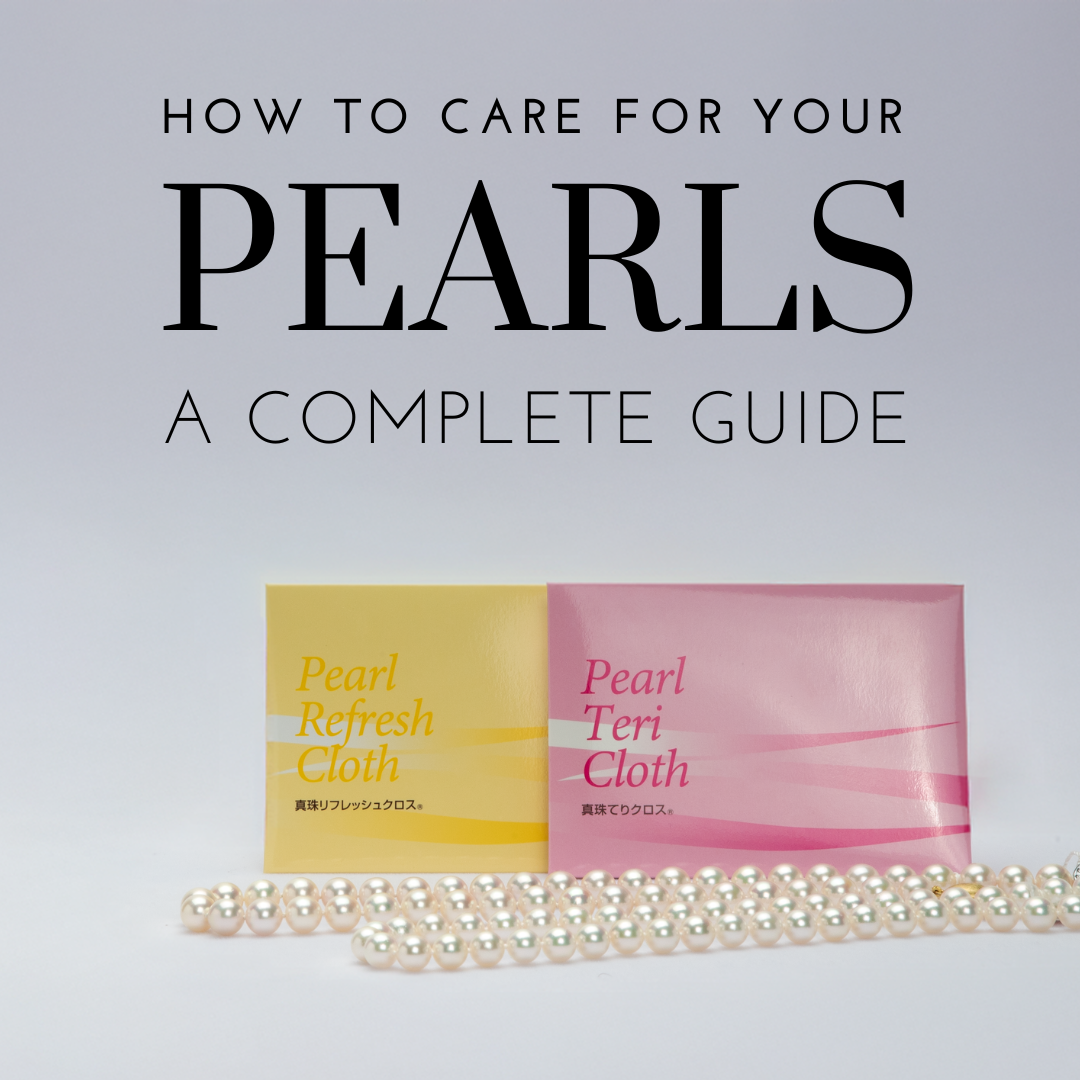
The same Pearl Science Laboratory that conducted this research also developed a cloth made specifically for pearls. The Pearl Teri Cloth is designed for everyday wiping: use the smooth, glossy side on pearls. Do not wash it, because washing removes its special ingredients.
Step 2Pearls on last, off first
Perfume, hairspray, and cosmetics are among the substances GIA lists as damaging to pearls. Finish your makeup, perfume, and hairspray first, then put your pearls on. At the end of the day, take your pearls off before anything else.
Step 3Do not judge by appearance alone
In the study, alkaline sweat caused no visible change, yet the surface had begun to change under the microscope. Even if your pearls look fine, keep wiping them after every wear.
Step 4Keep pearls away from heat and hot water
Boiling water clouded pearls in the lab, and heat produced measurable changes. Never clean pearls with hot water, and do not leave them in hot places. GIA also warns that heat from intense light can dry out nacre and cause cracks.
Step 5Store pearls away from strong sunlight and sudden changes
Ultraviolet light and changes in temperature and humidity are among the reported causes of pearl deterioration. Store your pearls in a soft pouch or a lined jewelry box, away from direct sunlight.
Step 6Refresh the luster every six months
Over time, tiny surface scratches can make pearls look dull. The Pearl Refresh Cloth, also developed by Pearl Science Laboratory, contains fine polishing agents. According to its product information, it removes only 0.3 to 0.5 microns of the pearl surface, and it is recommended for use about once every six months.

Miseki Tip: Pearl Science Laboratory does not ship to the U.S., but Miseki Jewelry makes its pearl care cloths available here. For both daily and six-month care, try the Pearl Care Cloth Set.
Pearl Care Checklist
| Do | Avoid |
|---|---|
| Wipe pearls with a very soft cloth after every wear | Putting pearls away with sweat or skin oils on them |
| Put pearls on after perfume, hairspray, and makeup | Spraying perfume or hairspray while wearing pearls |
| Store pearls in a soft pouch or lined box | Leaving pearls in direct sunlight or hot places |
| Refresh the luster about every six months | Cleaning pearls with hot water |
Frequently Asked Questions About Pearl Care
How often should I clean my pearls?
Wipe them with a very soft, clean cloth after every wear. This is GIA’s recommendation for routine care, and it is the most effective habit for protecting your pearls.
Can sweat damage pearls?
Yes. GIA lists perspiration among the substances that can damage pearls. In a 2026 study by Japan’s Pearl Science Laboratory, acidic artificial sweat clouded the surface of Akoya pearls and dissolved calcium carbonate on the surface.
Can I clean pearls with hot water?
No. In the same study, boiling water clouded the pearl surface and heat produced measurable changes in the pearls. Keep pearls away from hot water and heat.
My pearls look fine. Do I still need to wipe them?
Yes. In the study, alkaline artificial sweat caused no visible change, but the pearl surface had begun to change under the microscope. Regular wiping helps protect your pearls before damage becomes visible.
What is the best cloth for pearls?
Use a very soft, clean cloth. Miseki Jewelry carries the Pearl Teri Cloth and Pearl Refresh Cloth, both developed by Japan’s Pearl Science Laboratory specifically for pearls.
Pearl Care Essentials at Miseki Jewelry
About Miseki Jewelry
Founded in San Francisco in 1967, Miseki Jewelry is a Japanese-owned jewelry store in the city’s Japantown and a San Francisco Legacy Business. Entrusted from one generation of owners to the next, we take special pride in Akoya pearls and the pearl-culturing craft developed in Japan, and we celebrate every pearl the world’s waters produce, from South Sea and Tahitian to freshwater and natural pearls.
Our mission is simple: to carry Japan’s pearl culture forward and share the beauty of pearls with America and the world.
Image Credits
- Pearl deterioration test images (appearance and fluorescence; optical microscope; electron microscope): Pearl Science Laboratory, from “A Study of Pearl Deterioration and Its Causes (2026 Gemmological Society of Japan presentation),” Margarita, August 4, 2026. Source: https://margarite-web.com/report/post-4216/
- Pearl Teri Cloth and Pearl Care Cloth Set: Miseki Jewelry.
Sources
- Pearl Science Laboratory, “Shinju no Rekka to Sono Yoin ni Tsuite no Kosatsu (2026-nen Hoseki Gakkai Happyo)” [A Study of Pearl Deterioration and Its Causes (2026 Gemmological Society of Japan presentation)], Margarita, August 4, 2026. Original in Japanese, summarized and translated by Miseki Jewelry with permission. https://margarite-web.com/report/post-4216/
- GIA (Gemological Institute of America), “Pearl Care and Cleaning Guide.” https://www.gia.edu/pearl-care-cleaning